What Happens to the Density of a Gas as the Gas Is Compressed Into a Smaller Volume?
Properties of Matter: Gases
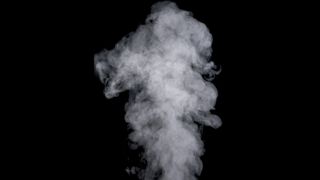
Gas is a state of thing that has no fixed shape and no fixed volume. Gases have a lower density than other states of matter, such as solids and liquids. At that place is a dandy deal of empty space between particles, which have a lot of kinetic free energy and aren't peculiarly attracted to one some other. Gas particles motion very fast and collide with one some other, causing them to diffuse, or spread out until they are evenly distributed throughout the volume of the container.
According to the educational website Lumen Learning gas tin just be contained by either being fully surrounded by a container or held together past gravity.
When more gas particles enter a container, there is less space for the particles to spread out, and they become compressed. The particles exert more than force on the interior book of the container. This forcefulness is chosen pressure level. There are several units used to express pressure level. Some of the nearly common are atmospheres (atm), pounds per square inch (psi), millimeters of mercury (mmHg) and pascals (Pa). The units relate to ane some other this mode: one atm = fourteen.7 psi = 760 mmHg = 101.3 kPa (one,000 pascals).
Related: Greenhouse gases: Causes, sources and environmental effects
A gas can be converted to a liquid through pinch at a suitable temperature, co-ordinate to Purdue Academy. But if the critical temperature is reached, the vapor cannot be liquified regardless of how much pressure is practical. Disquisitional pressure level is the pressure needed to liquefy a gas at its critical temperature.
Examples of critical temperatures and force per unit area of unlike substances according to Engineering Toolbox
| Substance | Critical temperature (degrees Fahrenheit) | Critical temperature (degrees Celsius) | Critical pressure (psi) |
|---|---|---|---|
| Oxygen | minus 181.5 | minus 118.6 | 732 |
| Helium | minus 456 | minus 271 | 33.2 |
| Ammonia | 270 | 132.4 | 1636 |
| Chlorine | 291 | 144 | 1118.7 |
Measurable properties of gases
Besides pressure, denoted in equations as P, gases accept other measurable properties: temperature (T), book (5) and number of particles, which is expressed in a mole number (n or mol). In piece of work involving gas temperature, the Kelvin calibration is often used.
Because temperature and pressure vary from place to place, scientists use a standard reference point, chosen standard temperature and pressure (STP), in calculations and equations. Standard temperature is the freezing bespeak of h2o — 32 degrees Fahrenheit (0 degrees Celsius, or 273.fifteen Kelvin). Standard pressure level is one temper (atm) — the force per unit area exerted by the temper on Globe at bounding main level.
Gas laws
Temperature, pressure, amount and volume of a gas are interdependent, and many scientists have adult laws to depict the relationships among them.
Boyle's police
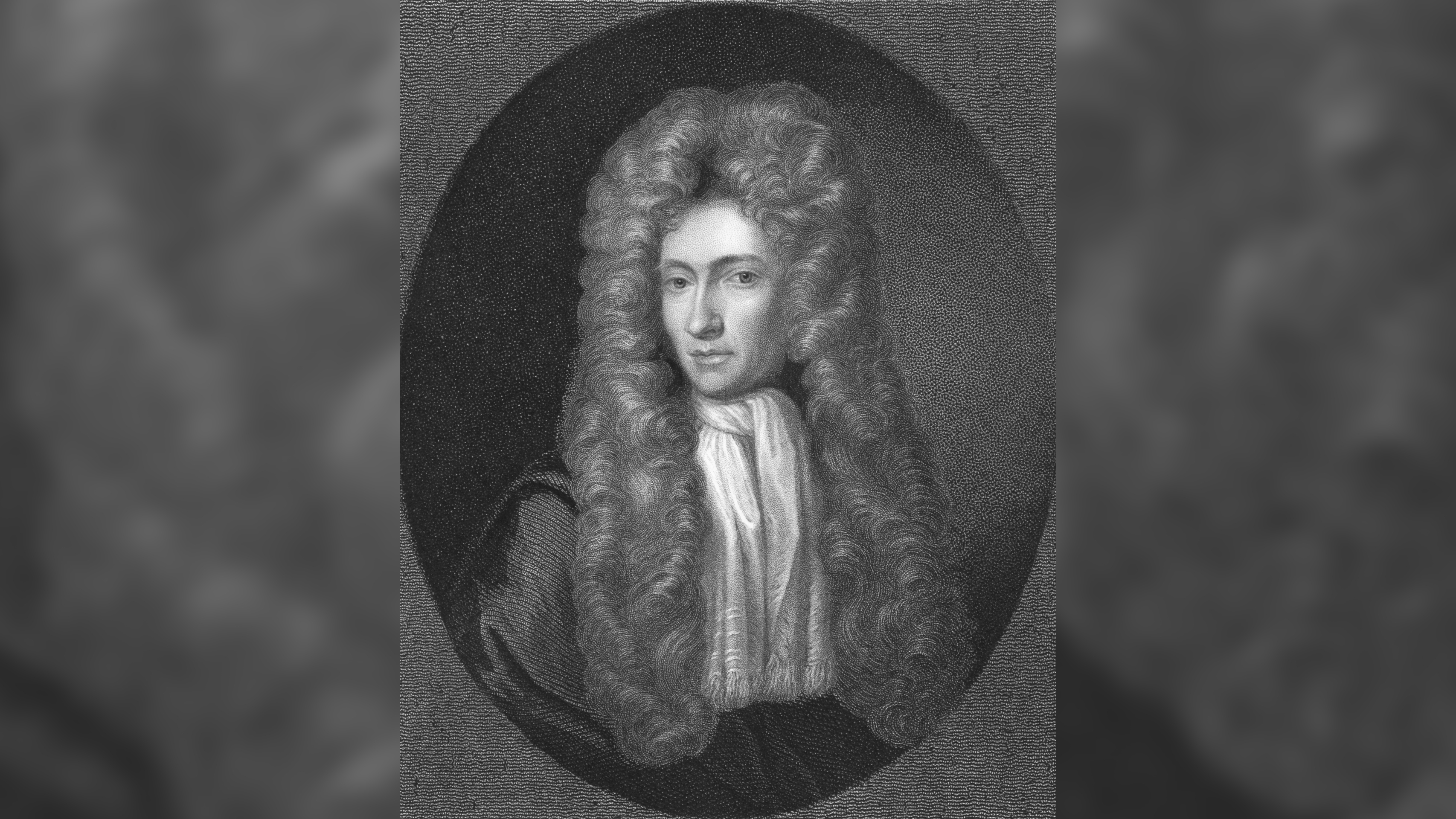
Named subsequently Robert Boyle, who beginning stated information technology in 1662. Boyle'southward law states that if the temperature is held constant, book and pressure level have an changed relationship; that is, as volume increases, pressure decreases, according to the University of California, Davis' ChemWiki.
Increasing the corporeality of space available will allow the gas particles to spread farther autonomously, but this reduces the number of particles available to collide with the container, so force per unit area decreases.
Decreasing the volume of the container forces the particles to collide more than oft, so the pressure level is increased. A proficient example of this is when you fill a tire with air. As more air goes in, the gas molecules get packed together, reducing their volume. Every bit long equally the temperature stays the same, the pressure level increases.
Charles' police (Gay-Lussac'south law)
In 1802, Joseph Louis Gay-Lussac, a French chemist and physicist referenced information gathered by his countryman, Jacque Charles, in a paper describing the straight relationship between the temperature and volume of a gas kept at a abiding pressure level. Most texts refer to this as Charles' constabulary, just a few call information technology Gay-Lussac's police, or even the Charles Gay-Lussac law.
This law states that the volume and temperature of a gas take a directly relationship: As temperature increases, book increases when pressure is held constant. Heating a gas increases the kinetic energy of the particles, causing the gas to expand. In order to keep the pressure abiding, the volume of the container must be increased when a gas is heated.
This police force explains why information technology is an important safe rule that y'all should never heat a closed container. Increasing temperature without increasing the volume available to accommodate the expanding gas means that pressure level builds upward inside the container and may cause information technology to explode. The law also explains why a turkey thermometer pops out when the turkey is washed: The volume of air trapped under the plunger increases as the temperature inside the turkey climbs.
Avogadro's number
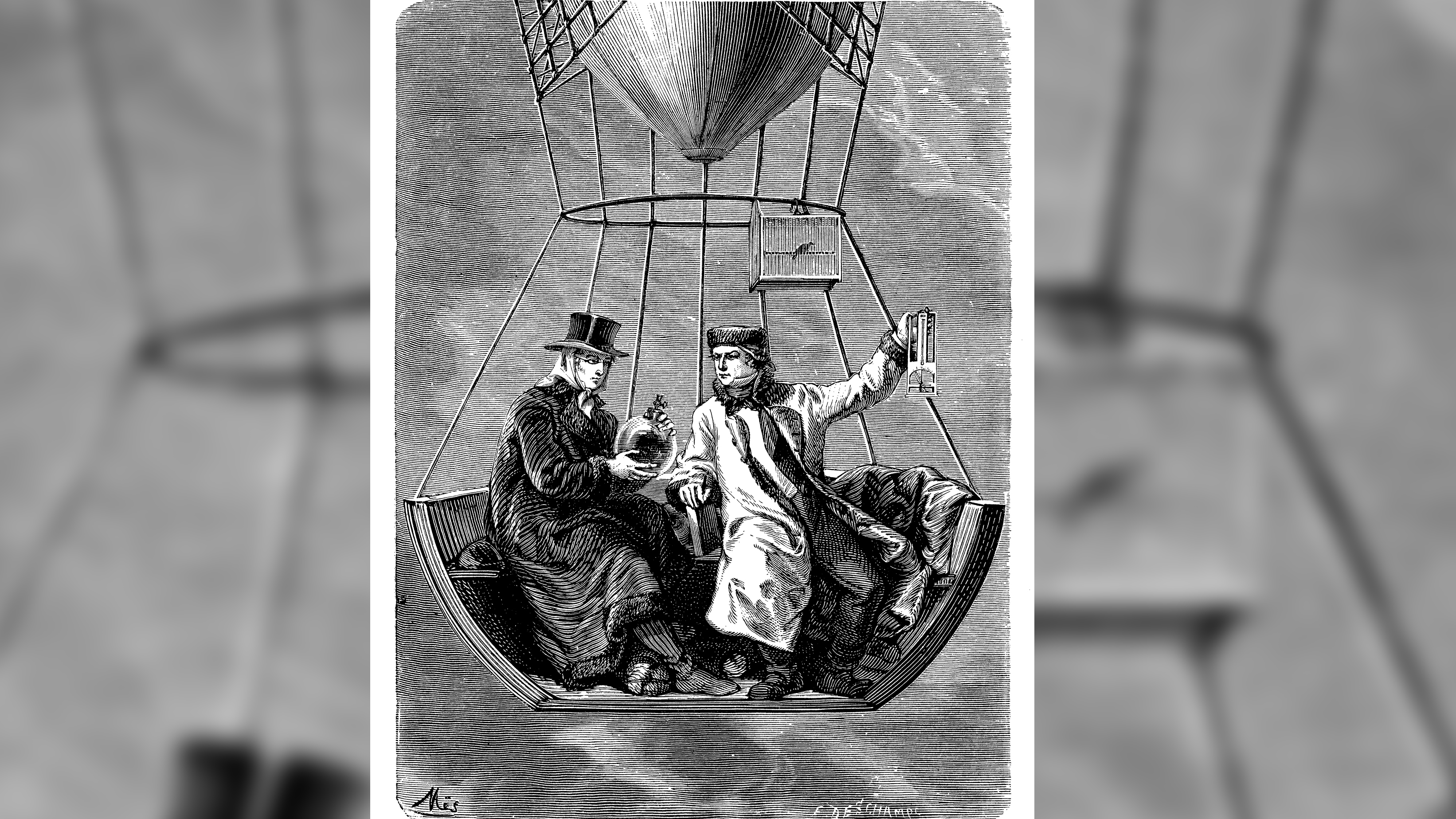
In 1811, Italian scientist Amedeo Avogadro proposed the idea that equal volumes of gas at the aforementioned temperature and pressure will have an equal number of particles, regardless of their chemic nature and concrete backdrop.
Platonic gas constant
The kinetic free energy per unit of temperature of i mole of a gas is a constant value, sometimes referred to every bit the Regnault constant, named after the French chemist Henri Victor Regnault. It is abbreviated by the letter R. Regnault studied the thermal properties of matter and discovered that Boyle's law was non perfect. When the temperature of a substance nears its boiling point, the expansion of the gas particles is non exactly compatible.
Ideal gas constabulary
Avogadro's Number, the platonic gas constant, and both Boyle's and Charles' laws combine to depict a theoretical platonic gas in which all particle collisions are absolutely equal. The laws come up very close to describing the beliefs of near gases, just at that place are very tiny mathematical deviations due to differences in actual particle size and tiny intermolecular forces in real gases. Nevertheless, these important laws are often combined into i equation known every bit the platonic gas law. Using this constabulary, you can find the value of whatever of the other variables — force per unit area, volume, number or temperature — if you know the value of the other 3.
Additional resources
Learn more than nigh supercritical fluids and their uses with this commodity from SciMed. For quick children-friendly facts about gases head over to the educational website Beloved My Science. Discover more than examples of gases with this informative fabric from the educational website Scientific discipline Notes.
Bibliography
- Knez, Željko, et al. "Industrial applications of supercritical fluids: A review." Free energy 77 (2014): 235-243.
- Silberberg, Martin. Principles of general chemistry. McGraw-Hill Pedagogy, 2012.
- Levy, Sharona T., and Uri Wilensky. "Gas laws and beyond: Strategies in exploring models of the dynamics of change in the gaseous state." annual meeting of the National Association for Research in Science Teaching, San Francisco, CA. 2006.
Source: https://www.livescience.com/53304-gases.html

Post a Comment for "What Happens to the Density of a Gas as the Gas Is Compressed Into a Smaller Volume?"